The Hip Thrust: A Must-Have Glute Exercise

What’s the Hip Thrust and Why Should You Add It to Your Workout?

The hip thrust is a strength-training exercise that mainly targets and strengthens your glute muscles. The movement is simple: you push your hips upward while lying on the floor, usually with a bench or another elevated surface to support your shoulders. Here’s how it works: lie on the floor or lean against a chair or bench with your knees bent and your feet flat on the ground, about shoulder-width apart. Squeeze your glutes and push your hips up, holding the contraction at the top before slowly lowering back down.
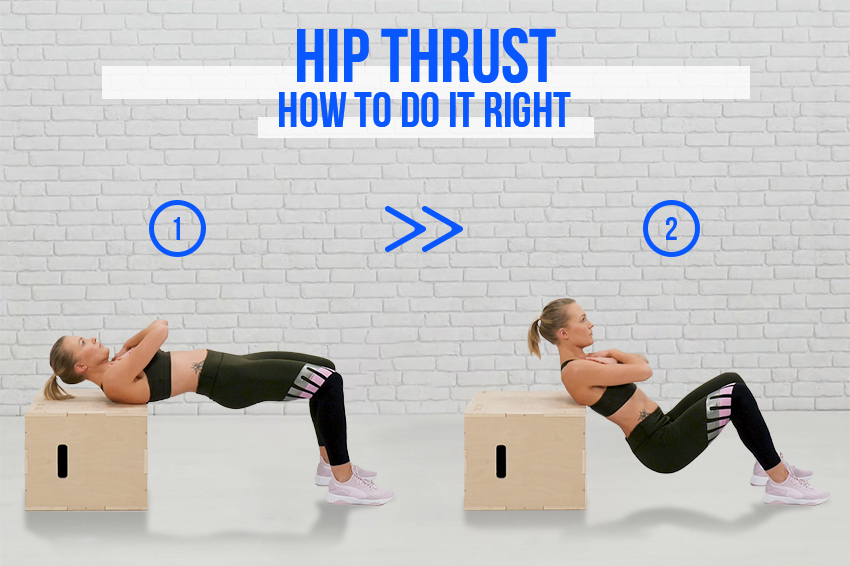
Girl performing hip thrust on a gym plyo box.

The hip thrust is very popular for its many benefits. It specifically targets the glutes, which can help improve their shape, size, and performance in various activities. By strengthening your glutes, hip thrusts can help reduce the risk of lower-back and hip injuries. They can also help restore muscle balance between your glutes and the muscles at the front of your thighs, which is important for overall muscle health.

What Is the Difference Between Hip Thrust and Glute Bridge?

The “hip thrust” and “glute bridge” are two exercises from the same family, but they differ in difficulty and intensity. Here are the main differences:

The hip thrust involves sitting on the floor with your upper back supported against a bench or another elevated surface, and it’s often done with added weight (barbell, dumbbell, kettlebell, etc.). The glute bridge, on the other hand, doesn’t require a support surface and is performed lying on your back with your feet flat on the floor and your knees bent.

The hip thrust is generally considered more effective for building glute strength and muscle mass, since it’s usually done with added resistance. The glute bridge is often used for glute activation, muscular endurance, warming up, or working the glutes with minimal equipment.

Both exercises target the glutes, but the hip thrust is usually better for muscle building and requires specific equipment, while the glute bridge can be done without extra gear and is great for endurance, activation, or warming up. Which one you choose depends on your personal goals and fitness level.
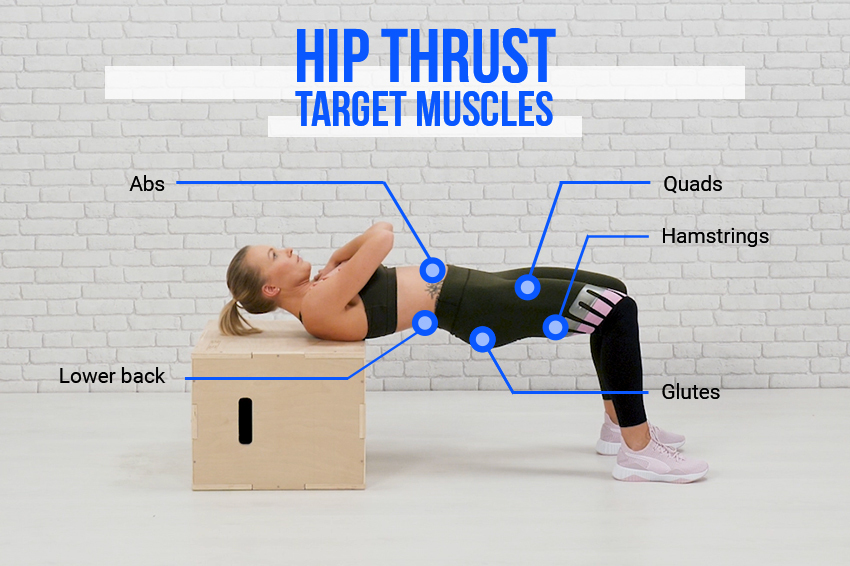
Which Muscles Does the Hip Thrust Target?

Hip thrust exercise explanation with highlighted muscles worked.

The hip thrust is a strength training exercise that mainly targets the glutes, but it also works other lower body muscles and the core. The main muscles involved are:

  • Glutes: the hip thrust is especially effective for building and strengthening your glutes, helping improve their shape and overall appearance.
  • Lower body stabilisers: located at the back of the thighs, these muscles help stabilise the hips, as do the adductors on the inner thighs. The quadriceps at the front of the thighs also help stabilise the hips and knees during the movement.
  • Upper body stabilisers: the lower-back muscles help stabilise your spine during the exercise, while the abs and obliques work to maintain core stability throughout the hip thrust.

It’s important to note that exercise variations and how you perform the movement can affect how intensely each muscle is worked. Make sure you use proper form to get the most benefits and lower your risk of injury.

How to Warm Up for the Hip Thrust?

Warming up before doing hip thrusts is essential to prevent injuries and get the most out of your workout. Here’s an example of a hip thrust warm-up routine:

  • Cardio warm-up: 5 to 10 minutes of light cardio, like walking or jogging in place, to get your blood flowing and raise your body temperature.
  • Mobility work: to activate your hip muscles and joints, you can do bodyweight squats, hip rotations, or, for strength activation, lateral lunges, archer squats, or dynamic glute bridges and hip abductions.

Make sure to warm up properly and raise your body temperature, keep your shoulders, back and feet stable, and focus on contracting your glutes with each repetition.

What Are the 5 Mistakes to Avoid for a Perfect Hip Thrust?

To perform a perfect hip thrust and get the most out of it, it’s essential to know the common mistakes so you can lower your risk of injury:

  1. Poor positioning: don’t overarch your lower back, as this can cause pain. Keep your back straight and maintain a neutral spine. You can also slightly tuck your pelvis to prevent the load from pulling your back into an excessive arch. Avoid placing your feet too close together or too far apart, as that can affect your stability.
  2. Not using proper support: make sure you’re using a stable bench, step, or a surface designed for hip thrusts to stay properly supported throughout the movement.
  3. Not fully extending the hips or engaging the core: be sure to fully extend your hips at the top of each rep by squeezing your glutes to get the most out of the exercise. Engage your core muscles to help stabilise your torso.
  4. Poor range of motion and movement speed: don’t do small, limited movements, as this reduces the exercise’s effectiveness. Lower yourself until you’re close to the floor, and control the descent by moving slowly and deliberately. The upward phase should be done explosively and dynamically.
  5. Poor recovery: don’t overload your body by doing too many hip thrusts. Make sure you give your muscles enough time to recover between sets or training sessions.

What Are the Hip Thrust Variations?

There are several exercises similar to hip thrusts:

  • The glute bridge uses the same movement pattern but without shoulder support, since it’s done on the floor. It mainly targets the glutes, along with the hamstrings and lower-back muscles. You can also do the glute bridge with your feet on an elevated surface to make it more challenging.
  • The squat is one of the best exercises for working the glutes. It engages multiple muscle groups, including the quadriceps, hamstrings, glutes, lower-back muscles, core, and stabilisers.
  • The lunges help improve balance and stability while targeting the legs, especially the quadriceps, hamstrings and glutes.
  • The step-ups help strengthen the glutes by stepping up and down on an elevated surface, while also improving balance and coordination. Your body weight acts as natural resistance, and the exercise is done one leg at a time.

Integrating a variety of these exercises into your routine can help work your glutes from different angles and prevent training plateaus. Use proper technique to lower your risk of injury, and progress consistently to keep developing your glutes.

Overall, the hip thrust offers plenty of benefits. By adding it properly into your training program, you can get closer to your fitness and health goals. Check it out in our Build (lower body) program!

Further reading

Join the 7 million users already registered on FizzUp

Join us

Trustpilot